Navigate the SOC 2 certification process with confidence. Step-by-step guide covering Type I vs Type II, costs, timelines, and automation tools for SaaS founders.
SOC 2 Compliance for SaaS Startups: A Practical Roadmap 2026
You've built a great product. Your next big customer—an enterprise with a six-figure contract—asks: "Are you SOC 2 compliant?" If you hesitate, the deal is dead. SOC 2 has become the de facto security standard for B2B SaaS, and achieving it is no longer optional for companies targeting the mid-market and enterprise segments. This roadmap demystifies the process.
Understanding SOC 2 Fundamentals
SOC 2 (System and Organization Controls 2) is an auditing standard developed by the AICPA. Unlike rigid checklists like PCI DSS, SOC 2 is based on Trust Services Criteria (TSC). You define your own controls, and an independent auditor verifies that those controls are designed (Type I) and operating effectively over time (Type II).
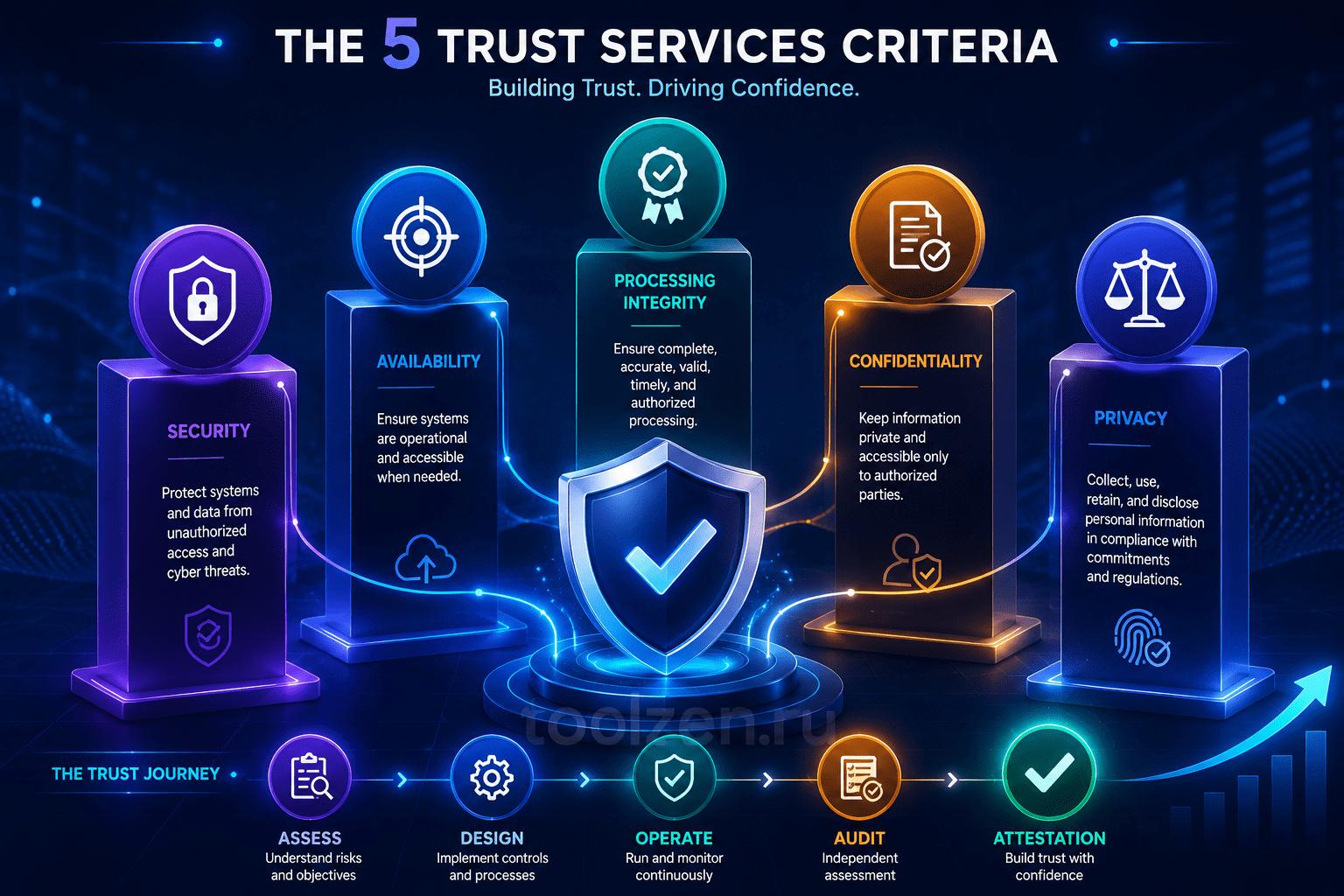
The Five Trust Services Criteria
- Security: Is the system protected against unauthorized access? Firewalls, MFA, intrusion detection.
- Availability: Is the system operational and accessible according to your SLA? Uptime monitoring, disaster recovery.
- Processing Integrity: Does the system process data accurately and on time? Quality assurance, error handling.
- Confidentiality: Is sensitive data (not necessarily PII) protected? Encryption, access controls, NDAs.
- Privacy: How do you handle personal information? GDPR/CCPA alignment, data minimization, consent management.
Note: Security is mandatory. The other four are optional based on your business model.
Type I vs Type II: The Strategic Choice
Type I: A point-in-time assessment. The auditor evaluates your controls at a specific moment. Faster (2-3 months), cheaper ($15k-$30k), and a good first step.
Type II: Evaluates controls over a period (usually 6-12 months). More valuable for enterprise sales, but requires sustained evidence. Budget: $30k-$80k+.
Startup strategy: Begin with Type I to unlock initial enterprise deals, then bridge to Type II within 12 months. Do not skip straight to Type II unless you have existing controls you've been operating for months.
The Automation Advantage
Manual compliance is a nightmare of screenshots, spreadsheets, and calendar reminders. In 2026, compliance automation platforms have transformed this landscape. Tools like Vanta, Drata, or Secureframe connect to your cloud infrastructure (AWS, Azure, GCP), HR systems, and code repositories to collect evidence continuously.
With Toolzen's workflow engine, you can build custom compliance automations: auto-revoke access for offboarded employees, trigger security training assignments, or generate audit-ready reports on demand. This integration layer is what separates startups that breeze through audits from those that drown in evidence collection.
The Step-by-Step Roadmap
Phase 1: Scoping (Weeks 1-2)
Define the boundaries. What systems are in scope? Customer-facing app? Internal admin panel? CI/CD pipeline? Smaller scope = simpler audit. Exclude non-critical systems initially.
Phase 2: Gap Analysis (Weeks 3-4)
Run a readiness assessment against SOC 2 criteria. Common gaps in startups: no formal incident response plan, weak access reviews, missing background checks for employees, and poor change management documentation.
Phase 3: Remediation (Weeks 5-10)
Close the gaps. Implement SSO + MFA everywhere, enforce least-privilege access, set up centralized logging, create policy documents, and train employees on security awareness. This is the most work-intensive phase.
Phase 4: Evidence Collection (Weeks 11-14)
Run in "audit mode" for at least 4-6 weeks. Let your automation tools collect evidence: access logs, change management tickets, background check records, penetration test reports.
Phase 5: Audit Execution (Weeks 15-18)
The auditor reviews your evidence, interviews key personnel, and tests controls. Expect 2-3 weeks of active back-and-forth.
Phase 6: Report Delivery (Week 19-20)
Receive your SOC 2 report. Share it under NDA with prospects and customers via your trust center.
Cost Breakdown Reality Check
- CPA Audit Firm: $25,000 - $50,000
- Compliance Automation Platform: $8,000 - $20,000/year
- Penetration Test: $10,000 - $25,000
- Internal Time (Team): 15-25 hours/week for 4 months
- Total Realistic Budget: $50,000 - $100,000+
This may seem steep, but consider that a single enterprise deal often covers this cost 10x over. SOC 2 is an investment in revenue, not an expense.
Conclusion
SOC 2 compliance is a significant undertaking, but with proper planning and automation, it is entirely achievable for a Series A startup. Start early, automate aggressively, and use the certification as a competitive moat. Your future enterprise customers will thank you.